Commercial Concrete vs. Residential Concrete: What's the Difference?
Concrete serves as the foundation for countless construction projects, from family home driveways to massive commercial warehouses. While the basic material remains similar, significant differences exist between commercial and residential concrete applications in terms of specifications, installation requirements, performance demands, and regulatory standards. Understanding these distinctions helps property owners, developers, and contractors make informed decisions ensuring projects meet their specific needs while complying with applicable codes and delivering expected performance.
Structural Requirements and Load Capacity
Commercial concrete must withstand substantially heavier loads than residential applications. Warehouse floors support forklifts, heavy machinery, and stacked inventory weighing thousands of pounds per square foot. Retail store floors endure constant foot traffic from hundreds or thousands of customers daily. These demanding conditions require higher strength concrete with robust reinforcement. Residential concrete faces comparatively lighter loads. Home driveways support family vehicles typically under 6,000 pounds. Basement floors carry furniture, appliances, and occupants. Patios handle outdoor furniture and occasional gatherings. These lighter duty applications allow lower strength specifications while still providing adequate performance.
Thickness requirements also vary based on intended use. Commercial floor slabs often measure 6 to 12 inches thick depending on expected loads and subgrade conditions. Residential driveways typically require only 4 to 6 inches of concrete while walkways and patios may be just 4 inches thick. Reinforcement strategies differ between commercial and residential applications. Commercial slabs frequently incorporate heavy rebar grids, post-tensioning cables, or structural fibers to handle point loads and prevent cracking under stress. Residential concrete often uses wire mesh or light rebar, with many homeowner projects relying solely on fiber reinforcement for crack control.
Project Scale and Complexity
Commercial concrete projects operate on dramatically different scales than residential work. A single commercial warehouse floor might contain 50,000 to 200,000 square feet of concrete placed in continuous pours. Shopping centers, office buildings, and industrial facilities involve massive concrete quantities requiring careful logistics and coordination. Residential projects involve comparatively modest quantities. A large home driveway rarely exceeds 1,000 square feet. Patios, walkways, and basement floors measure in hundreds rather than thousands of square feet. These smaller scales allow simpler planning, shorter installation timeframes, and less complex equipment needs. Scheduling complexity increases with commercial projects. Large pours require coordination between ready-mix suppliers, concrete pumping companies, finishing crews, and testing laboratories. Timing becomes critical because concrete curing cannot stop once placement begins. Delays or coordination failures on commercial jobs cost thousands of dollars per hour.
Performance Specifications and Standards
Commercial concrete follows strict performance specifications addressing numerous factors beyond basic strength. Specifications often include requirements for slump, air content, aggregate gradation, admixtures, finishing methods, curing procedures, and quality control testing. These detailed requirements ensure concrete performs reliably under demanding commercial conditions. Testing protocols for commercial projects include cylinder samples taken during placement and tested at specific intervals to verify strength development. Slump tests confirm proper consistency. Air content measurements ensure freeze-thaw resistance in appropriate climates. These quality control measures provide documented proof that concrete meets specifications.
Surface finish requirements vary dramatically between applications. Commercial floors in retail environments demand extremely flat, level surfaces measured using specialized instruments. Floor flatness and floor levelness (FF/FL) numbers quantify surface quality with commercial projects often requiring FF values of 25 to 50 or higher. Warehouses with narrow-aisle forklifts need even higher flatness numbers preventing operational problems. Residential concrete accepts less stringent flatness standards. Driveways need adequate slope for drainage but don't require laser-level precision. Patios need general levelness preventing water pooling but tolerate minor variations invisible to casual observation.
Building Codes and Permit Requirements
Commercial construction faces extensive regulatory oversight through building codes, zoning ordinances, accessibility requirements, and environmental regulations. Every aspect of commercial concrete work from foundation design to final finishes must comply with applicable codes. Inspections occur at multiple project stages with work stopping until inspectors approve each phase. Permit requirements for commercial projects involve detailed plan reviews, engineering calculations, soil reports, and environmental assessments. Approval processes can take weeks or months depending on project complexity and jurisdiction workload. Steadfast Concrete navigates these regulatory requirements routinely for Frisco commercial clients, ensuring projects meet all applicable standards.
Installation Equipment and Techniques
Commercial concrete placement often requires specialized heavy equipment. Concrete pumps with boom trucks place material precisely in large buildings. Laser screeds create perfectly flat floors over large areas. Ride-on power trowels finish thousands of square feet efficiently. This equipment investment makes sense for commercial scale but proves impractical for residential work. Residential concrete contractors use smaller, more versatile equipment suited to home-scale projects. Wheelbarrows or small line pumps move concrete. Hand screeds and bull floats level surfaces. Walk-behind power trowels or hand troweling completes finishing. This lighter equipment accesses residential sites easily without damaging landscaping or requiring extensive site preparation.
Timeline and Project Duration
Commercial concrete projects extend over months or years as part of larger construction programs. Concrete work must coordinate with site preparation, utilities, structural steel, and building envelope activities. Schedule delays affect entire project timelines creating pressure for on-time concrete completion. Residential projects complete quickly with minimal dependencies. A driveway or patio installation from start to finish typically takes two to five days including excavation, base preparation, concrete placement, and finishing. This rapid completion satisfies homeowner desires for quick results and minimal disruption.
Aesthetic Considerations
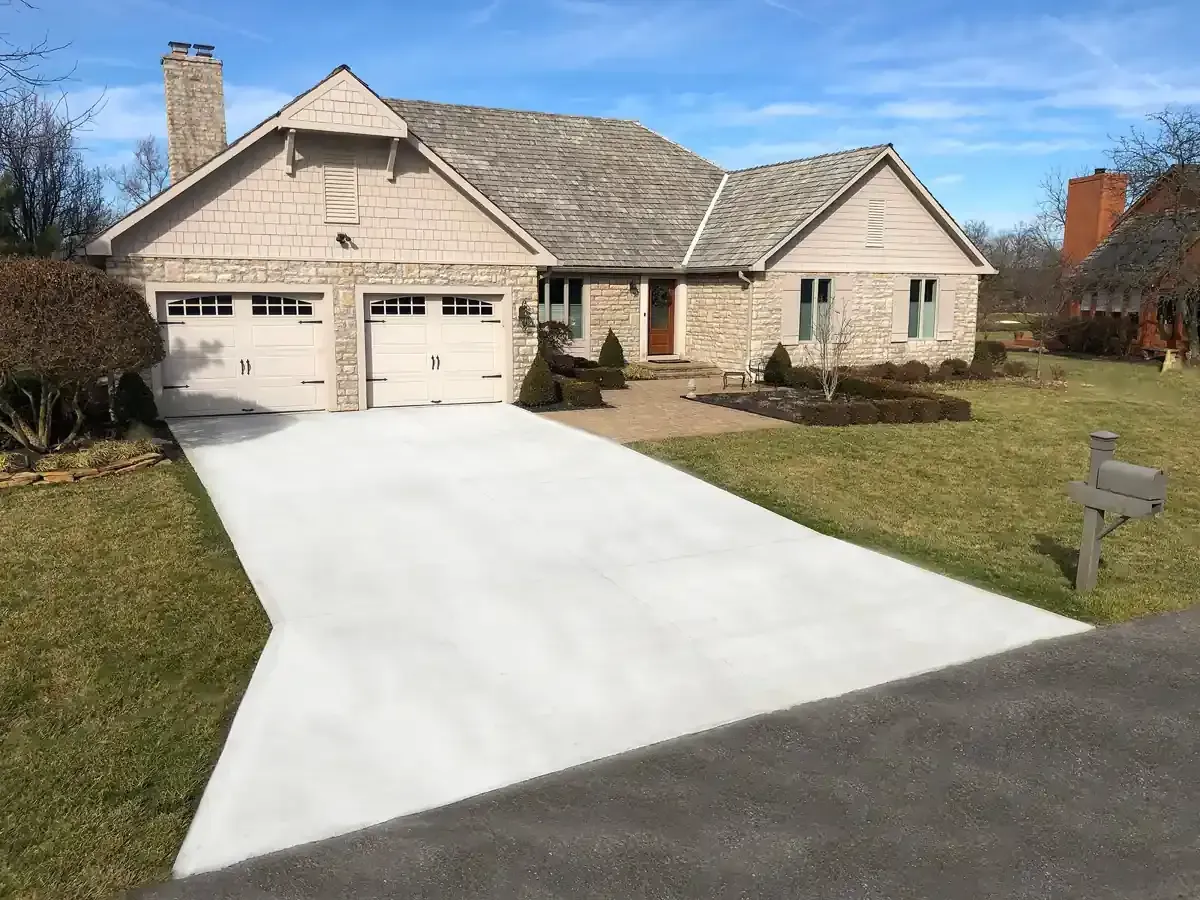
Commercial concrete increasingly incorporates decorative elements in retail, hospitality, and office environments. Polished concrete floors, colored concrete, and stamped patterns appear in commercial spaces seeking upscale appearances. However, durability and maintenance considerations often limit decorative options compared to residential applications. Residential concrete embraces decorative finishes enthusiastically. Homeowners select stamped patterns, stained colors, exposed aggregate, and other decorative treatments for driveways, patios, and walkways. Aesthetic preferences drive decisions more than performance requirements in many residential applications.
Conclusion
Commercial and residential concrete serve different purposes with distinct requirements for strength, performance, installation complexity, and regulatory compliance. Commercial applications demand higher strength, extensive testing, code compliance, and specialized installation techniques handling large-scale projects and heavy-duty performance. Residential concrete emphasizes cost-effectiveness, aesthetic flexibility, and simpler installation for lighter-duty home applications. Understanding these differences helps property owners select appropriate specifications, contractors, and approaches for their specific needs. Commercial developers require contractors experienced with large-scale projects, performance specifications, and regulatory requirements. Homeowners benefit from contractors specializing in residential work who understand aesthetic priorities and cost-effective solutions.
Contact Steadfast Concrete at (214) 833-6372 to discuss your concrete project, whether commercial or residential. We'll evaluate your requirements, explain appropriate approaches, and provide detailed estimates ensuring your project receives the right concrete solution for its intended purpose.